
 Available in US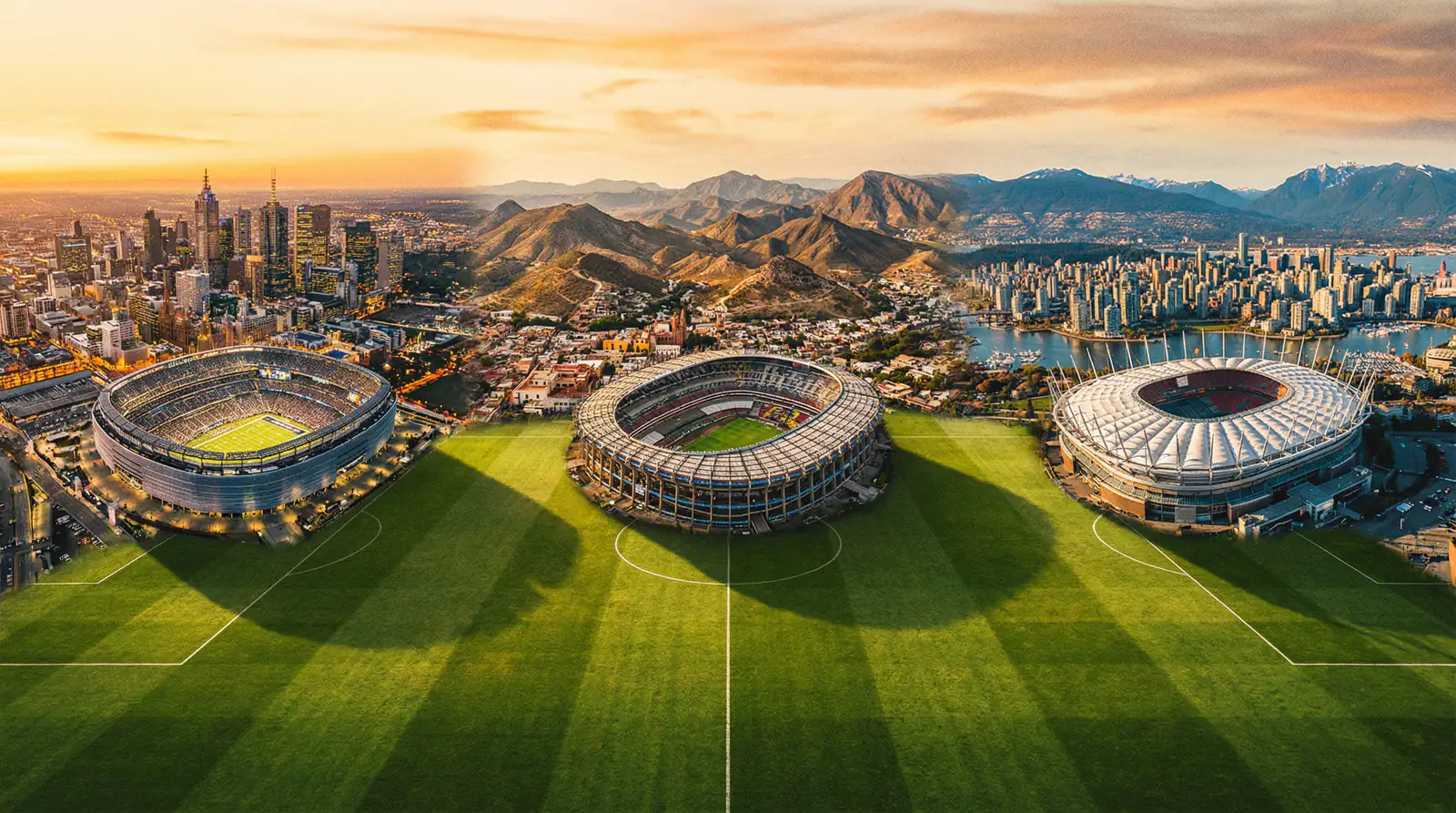
The last time FIFA expanded the World Cup, the year was 1998, and the host nation France rode that energy all the way to a first trophy. Now the tournament doubles down on ambition: 48 teams, three countries, 16 stadiums stretching from Vancouver to Mexico City, and 104 matches crammed into 39 days of summer football. The 2026 World Cup is not just bigger — it rewrites the operational manual for international tournament football.
I have spent the past nine years covering tournament betting markets, and I can tell you that format changes create chaos in the odds. More teams means more unknowns. More unknowns means more value for punters willing to do the homework. This guide is that homework — a complete breakdown of how the 2026 tournament works, who plays whom, when the matches kick off in Irish time, and where the smart money is already moving. Whether you are a first-time World Cup punter or a veteran of every outright market since 2010, the structure laid out here will save you hours of digging through FIFA press releases and fixture PDFs.
Forty-eight nations, twelve groups, one trophy. Let me walk you through every layer of it.
The New 48-Team Format — How It Works
For every World Cup since 1998, the format has been frozen at 32 teams in eight groups of four. That model produced some iconic tournaments, but it also locked out entire footballing regions. Africa sent five teams. Asia sent four and a half. Oceania sent half a team via playoff. FIFA’s answer in 2026 is expansion: 48 teams, 12 groups of four, and a knockout bracket that begins with a Round of 32 rather than the traditional Round of 16.
The maths behind the expansion matter for anyone placing outright or group bets. More teams means more group matches, more variables, and more upsets — the probability of a shock result increases simply because there are more opportunities for one. In the old 32-team format, a top seed faced two genuine challengers and one minnow. In the 48-team draw, groups still contain four teams, but the range of quality within each group has widened. Some groups look like strolls for the favourites. Others resemble a cage fight from matchday one.
The tournament kicks off on 11 June 2026 with Mexico hosting South Africa at Estadio Azteca, and the final is set for 19 July at MetLife Stadium in East Rutherford, New Jersey. Between those bookends sit 104 matches — 48 in the group stage, 16 in the Round of 32, eight in the Round of 16, four quarter-finals, two semi-finals, a third-place match, and the final itself.
Group Stage — 12 Groups of Four
Each group contains four teams drawn from different seeding pots. Every team plays three group matches, same as the previous format. The top two finishers in each group qualify automatically for the Round of 32 — that accounts for 24 of the 32 knockout spots. The remaining eight places go to the best third-placed teams across the 12 groups, ranked by points, goal difference, and goals scored.
This third-place pathway changes the betting dynamics significantly. In a 32-team World Cup, finishing third in your group meant elimination. Now, a team can lose one match, draw another, and still sneak through with four points if the numbers fall right. For punters, this means “to qualify” markets carry different implied probabilities than they did at Qatar 2022 or Russia 2018. A side priced at 4/1 to qualify from their group in the old format might be closer to 5/2 under the new structure — more exits are available, so the floor is higher.
Tiebreakers within groups follow the standard FIFA protocol: points first, then goal difference, then goals scored, then head-to-head record, then fair play points, and finally a drawing of lots. The best third-placed rankings use the same criteria but compare across all 12 groups. If you are betting on group outcomes, goal difference matters more than ever — a side that beats a minnow 4-0 instead of 1-0 could be the difference between third-place progression and a flight home.
Knockout Rounds — Round of 32 Onwards
The knockout bracket from the Round of 32 onward is single-elimination: lose and you are out. Extra time and penalties apply in every round. The bracket structure follows a seeded format where group winners and the best third-placed teams are placed to avoid rematches until the later rounds.
From a betting perspective, the Round of 32 is a new creation. Previous World Cups jumped straight from the group stage to the Round of 16. The extra knockout round adds a full day of fixtures and, crucially, an additional hurdle for any outright winner. A team lifting the trophy in 2026 will have played a minimum of seven matches — three in the group stage and four in the knockouts. If matches go to extra time, the physical toll accumulates. Squad depth becomes a more decisive factor, which is why nations with 26-man squads full of quality — France, England, Spain — hold a structural advantage over smaller federations.
The Round of 16 follows familiar lines from there: quarter-finals, semi-finals, the third-place match (which nobody pretends to care about), and the final. All knockout matches from the quarter-finals onward will be played at stadiums in the United States, with MetLife Stadium hosting the showpiece.
All 12 Groups — The Full World Cup 2026 Draw
I remember watching the draw ceremony live and immediately reaching for a calculator. Some groups screamed drama. Others looked like a procession. If you are planning your World Cup bets around group outcomes, this is the section to bookmark — every team, every group, and a quick-fire read on the competitive balance.
Group A — Mexico, South Korea, South Africa, Czechia
Mexico open the tournament as hosts in Estadio Azteca, and their group is kind enough to justify genuine optimism. South Korea bring pedigree and pace, South Africa carry the romance of an opening-day fixture, and Czechia — who broke Irish hearts in the playoff penalty shootout — are a disciplined, technically sound side that could threaten second place. This is a group where two results can flip the entire predicted table.
Group B — Canada, Switzerland, Qatar, Bosnia & Herzegovina
Canada get home advantage in at least one group match and face a Swiss side that thrives at tournaments without ever winning one. Qatar’s World Cup pedigree is limited to a single home tournament in 2022, and Bosnia & Herzegovina add Central European grit. Switzerland are the pick to top this, with Canada pushing hard for second.
Group C — Brazil, Morocco, Scotland, Haiti
The group every Irish punter will be watching sideways. Brazil are five-time champions and overwhelming group favourites. Morocco reached the World Cup semi-finals in 2022 and are no longer anyone’s idea of an underdog. Scotland, backed by the Tartan Army and plenty of Celtic-Irish goodwill, face a steep hill but could pinch third place and a route through as one of the best third-placed sides. Haiti make their World Cup return and will be out to enjoy every moment. For a deeper look at Scotland’s path, head to the full team profiles.
Group D — USA, Paraguay, Australia, Türkiye
The hosts’ group. The USA will play in front of enormous home crowds and carry the pressure that comes with it. Türkiye are resurgent under a talented young generation and could be the banana skin. Paraguay are a South American qualifier who never make life easy, and Australia bring physicality and organised defending. This group could be tighter than the odds suggest.
Group E — Germany, Côte d’Ivoire, Ecuador, Curaçao
Germany are four-time champions but have underperformed at the last two World Cups, exiting in the group stage both times. Côte d’Ivoire, reigning Africa Cup of Nations champions, are a serious proposition. Ecuador qualified comfortably from South America, and Curaçao make their debut. Germany’s tournament pedigree should see them through, but there is a scenario where Côte d’Ivoire top this group.
Group F — Netherlands, Japan, Sweden, Tunisia
A genuinely competitive group with no easy fixtures. The Netherlands reached the quarter-finals in 2022 and boast squad depth across Europe’s top leagues. Japan continue their upward trajectory and shocked both Germany and Spain in Qatar. Sweden are rebuilding, and Tunisia bring African solidity. This is one of the groups where third place could be enough to progress.
Group G — Belgium, Egypt, Iran, New Zealand
Belgium’s golden generation has aged, and this squad is in transition — but the group draw is forgiving. Egypt bring Mohamed Salah and continental pedigree. Iran’s participation remains subject to an ongoing FIFA review following geopolitical tensions, with a final decision expected at the FIFA Congress on 30 April in Vancouver. New Zealand will find the going tough but earned their place through Oceanian qualification.
Group H — Spain, Saudi Arabia, Uruguay, Cape Verde
Spain are among the tournament favourites and have arguably the most exciting young squad in football. Uruguay, a two-time World Cup winner, are always dangerous at this level. Saudi Arabia shocked Argentina in Qatar’s opening match and have the tactical discipline to cause problems. Cape Verde are the debutants and will relish the stage. Spain should top this, but the battle for second is genuinely open.
Group I — France, Senegal, Norway, Iraq
France arrive as defending champions — or at least as runners-up from Qatar, where they lost the final on penalties to Argentina. Senegal, led by another generation of talent, are Africa’s strongest contender after Morocco. Norway bring Erling Haaland, and that alone makes them a threat in any single match. Iraq complete the group and will be a physical, committed opponent. France should dominate, but the Norway-Senegal fixture could be electric.
Group J — Argentina, Algeria, Austria, Jordan
The reigning champions head a group that looks manageable on paper. Algeria have AFCON pedigree and a passionate support base. Austria press high and play a demanding brand of football that can trouble anyone on the day. Jordan make their World Cup debut — they reached the Asian Cup final in 2024 and deserve respect. Argentina should cruise, but the second-place battle is intriguing.
Group K — Portugal, Colombia, Uzbekistan, DR Congo
Portugal topped Ireland’s qualifying group and arrive with a squad brimming with talent across every position. Colombia are the dark horse many analysts fancy for a deep run, combining flair with genuine tournament experience. Uzbekistan qualified through Asia and will be organised, while DR Congo bring raw athleticism and African qualifying form. Portugal and Colombia should progress, but the gap is not as wide as the odds imply.
Group L — England, Croatia, Ghana, Panama
For Irish punters, this is the group. England are perennial favourites who have reached the semi-finals and a final at the last two major tournaments. Croatia, finalists in 2018 and semi-finalists in 2022, are the danger side — ageing but still packed with midfield quality. Ghana have speed and unpredictability, and Panama bring the kind of low-block defensive grit that can frustrate technically superior teams. England should qualify, but the England-Croatia opener on 17 June is a genuine heavyweight fixture.
Full Schedule and Irish Kick-Off Times
Here is the part that will define your summer: the schedule. Matches across North America mean kick-offs that, by Irish Summer Time, land anywhere between early evening and the small hours. A 1:00 PM Eastern Time start is 18:00 IST — civilised. A 9:00 PM Eastern start is 02:00 IST — less civilised, but nothing a late-night pub session cannot fix. Understanding the time difference is the single most practical thing you can do before this tournament begins.
The key conversion is simple: Irish Summer Time sits five hours ahead of Eastern Time. Most east-coast US venues — MetLife Stadium in New Jersey, Hard Rock Stadium in Miami, Gillette Stadium near Boston, Lincoln Financial Field in Philadelphia — operate in ET. Central Time venues like AT&T Stadium in Dallas and NRG Stadium in Houston are six hours behind IST. West-coast venues — SoFi Stadium in LA, Lumen Field in Seattle, Levi’s Stadium near San Francisco — are eight hours behind IST. Mexican venues operate on Central Daylight Time, six hours behind IST.
Group Stage — 11 to 26 June
The group stage spans 16 days with multiple matches per day. The opening match — Mexico versus South Africa — takes place on 11 June at Estadio Azteca, with a kick-off likely around 17:00 local time, which translates to midnight IST. Each matchday during the group stage features between three and four fixtures, with the earliest kick-offs at 12:00 or 13:00 ET (17:00 or 18:00 IST) and the latest at 21:00 ET (02:00 IST).
For Irish fans tracking England, the Group L schedule reads: England versus Croatia on 17 June at AT&T Stadium in Dallas with a 4:00 PM ET kick-off, translating to 21:00 IST — a perfect evening match. England versus Ghana on 22 June at Gillette Stadium in Boston starts at 7:00 PM ET, which is midnight IST. The final group match falls on 27 June with all Group L fixtures played simultaneously.
Scotland’s Group C fixtures are tougher on the body clock. Haiti versus Scotland on 13 June at Gillette Stadium kicks off at 9:00 PM ET — that is 02:00 IST, deep into the night. Scotland versus Morocco on 19 June at the same venue carries the same 9:00 PM ET slot. Scotland versus Brazil on 24 June at Hard Rock Stadium in Miami moves earlier to 6:00 PM ET, landing at 23:00 IST.
The final round of group matches will be played simultaneously within each group, as is standard FIFA practice to prevent collusion. For punters placing in-play bets, this means you cannot watch one result develop and then bet on the other — both matches run at the same time.
Knockout Rounds — 28 June to 19 July
The Round of 32 begins on 28 June and runs through 2 July. With 16 matches to play across five days, the schedule is relentless — three or four matches per day, spread across multiple time zones. For Irish viewers, expect kick-offs ranging from 18:00 IST to 02:00 IST.
The Round of 16 follows from 4 to 7 July with two matches per day. Quarter-finals are on 9-10 and 11-12 July, semi-finals on 15 and 16 July, and the third-place match on 18 July. The final takes place on 19 July at MetLife Stadium, with kick-off expected at 4:00 PM ET — which is 21:00 IST, a prime-time slot that means you will not need to set an alarm.
If you are planning to watch the tournament seriously from Ireland, the group stage is the endurance test. Multiple late-night kick-offs across 16 consecutive days demand either a flexible work schedule or an understanding employer. The knockouts are more manageable, with fewer matches and more predictable time slots. Plenty of Irish pubs will screen the marquee fixtures regardless of the hour — the late-night World Cup session is as much a part of Irish football culture as anything that happens on the pitch.
Host Nations and Venues
Three countries hosting a single World Cup sounds unwieldy until you look at a map. The United States, Mexico, and Canada span a continent, and the 16 selected stadiums are spread across four time zones, three climates, and two languages. The logistical challenge is immense — but for spectators and punters alike, the variety creates distinct match conditions that can influence outcomes.
The United States hosts the lion’s share with 11 stadiums. The eastern seaboard provides MetLife Stadium in East Rutherford, New Jersey (the final venue, capacity 82,500), Gillette Stadium in Foxborough near Boston, and Lincoln Financial Field in Philadelphia. The southern belt includes Hard Rock Stadium in Miami Gardens (where Florida’s June humidity becomes a genuine tactical factor), Mercedes-Benz Stadium in Atlanta (a retractable-roof venue that eliminates weather variables), AT&T Stadium in Arlington near Dallas (another dome, another controlled environment), and NRG Stadium in Houston. The west coast offers SoFi Stadium in Inglewood near Los Angeles, Levi’s Stadium in Santa Clara near San Francisco, and Lumen Field in Seattle. GEHA Field at Arrowhead Stadium in Kansas City rounds out the US contingent.
Mexico contributes three venues, each carrying genuine football history. Estadio Azteca in Mexico City hosts the opening match and sits 2,200 metres above sea level — altitude is a measurable factor that affects stamina, ball flight, and recovery. Estadio BBVA in Monterrey is a modern stadium with excellent facilities, and Estadio Akron in Guadalajara (home of Chivas) adds another high-altitude venue at 1,566 metres. European and South American teams travelling to Mexican venues will face a physical adjustment that lowland-based squads do not encounter.
Canada provides two venues: BMO Field in Toronto and BC Place in Vancouver. Both are familiar to MLS and Canadian football audiences, and Vancouver also hosts the FIFA Congress on 30 April. Toronto is an accessible city for Irish fans given direct flights from Dublin, and the city’s large Irish diaspora means pub culture and community support are readily available.
From a betting angle, venue matters more than casual punters realise. Dome stadiums like AT&T Stadium, Mercedes-Benz Stadium, and SoFi Stadium remove weather from the equation, which tends to favour the technically superior side. Open-air venues in Miami, Houston, and the Mexican cities introduce heat, humidity, and altitude — conditions that can blunt a possession-heavy team’s advantage and level the playing field for physically robust underdogs.
Key Dates and Milestones
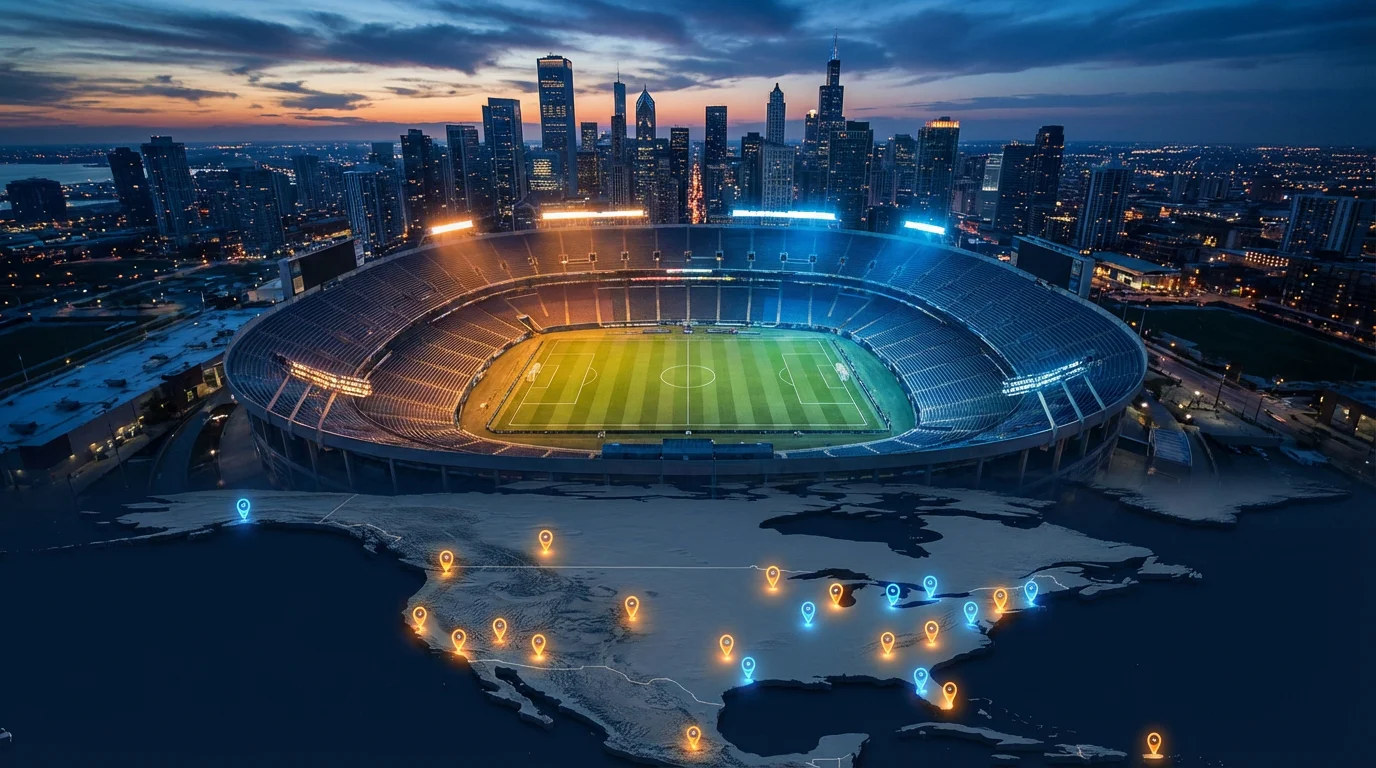
Every tournament has its rhythm — the dates that define the narrative arc from the first whistle to the final confetti cannon. Pinning these down early lets you plan your betting schedule around the moments that actually matter, rather than reacting after the market has already moved.
The tournament opens on 11 June 2026 with Mexico versus South Africa at Estadio Azteca. This match is more than ceremonial — it sets the tone, and opening-day results at World Cups often create early momentum shifts in outright markets. The group stage runs through 26 June, a 16-day marathon of daily football that is the heaviest concentration of fixtures in any sporting event on the planet.
The Round of 32, a new addition to the World Cup format, begins on 28 June and concludes by 2 July. This is the phase where third-placed qualifiers face group winners, and historically the equivalent fixtures at the European Championship have produced some of the tournament’s best upsets. The Round of 16 follows from 4 to 7 July, featuring eight matches that traditionally sharpen the field to the genuine contenders.
Quarter-finals are spread across 9 to 12 July, with two matches on each of two matchdays. The semi-finals take place on 15 and 16 July — these are the fixtures where tournament narratives crystallise and where in-play betting volumes reach their peak. The third-place match on 18 July is a low-stakes affair that most punters ignore, though it can offer niche value in goal-related markets because neither side has much to lose.
The final on 19 July at MetLife Stadium in East Rutherford, New Jersey, is the calendar centrepiece. A 4:00 PM ET kick-off gives Irish fans a 21:00 IST start — ideal for a pub gathering. MetLife Stadium’s capacity of 82,500 makes it the largest venue in the tournament, and the atmosphere will carry a distinctly American sporting-event flavour blended with global football passion.
One date that falls outside the tournament window but carries weight: the FIFA Congress in Vancouver on 30 April 2026, where several administrative decisions — including the status of Iran’s participation — are expected to be finalised. Any last-minute changes to the field of 48 teams would send ripples through the outright and group betting markets overnight.
Tournament Favourites at a Glance
Who lifts the trophy on 19 July? That question drives the entire outright market, and the answer depends on which lens you use. If you follow the bookmakers, the picture is straightforward — a cluster of European and South American heavyweights dominate the top of the betting, with a chasing pack of dark horses offering bigger prices for those willing to take a swing.
France enter as the team to beat. They are defending champions in all but name — runners-up in Qatar after a penalty shootout defeat, but champions from Russia 2018. Kylian Mbappé anchors an attack that combines speed, finishing, and depth. The squad features multiple options in every position, and Didier Deschamps’ tournament management is the gold standard. France are typically priced around 9/2 in outright markets.
England have been the nearly men of international football for decades, but consecutive semi-final and final appearances at Euro 2020 and the 2022 World Cup have shifted the narrative. The squad is loaded with Premier League talent, the depth is extraordinary, and the manager’s approach — whether it is still Gareth Southgate or a successor — tends toward pragmatic knockout football that travels well in tournaments. England sit around 11/2 in most books.
Argentina present the romantic narrative: can they defend the title? Lionel Messi will be 39 by the time the final comes around, and while his involvement is expected, the physical toll of a seven-match tournament at that age is real. The squad around him — Julián Álvarez, Enzo Fernández, Alexis Mac Allister — is strong enough to compete without him at peak power, but the Messi factor distorts the odds. Argentina tend to sit around 6/1.
Brazil are five-time champions and carry a generation of attacking talent that can match anyone. Their qualifying campaign through South America was occasionally bumpy, but tournament football suits Brazil — they raise their intensity when it matters. Expect odds around 7/1 or 15/2 for the Seleção.
Spain and Germany complete the top tier. Spain’s young squad — built around Barcelona and Real Madrid players — plays a possession-dominant style that can suffocate opponents over 90 minutes. Germany, four-time champions, have underperformed at the last two World Cups but remain a tournament pedigree side that history suggests you should never dismiss. Both are typically priced between 8/1 and 12/1.
Beyond the top six, the dark horse market is where value hunters live. Morocco reached the 2022 semi-finals and have strengthened since. Colombia combine South American flair with European-based experience. Croatia’s midfield remains world-class even as the squad ages. The Netherlands carry depth and tactical flexibility. For a full assessment of outsiders, the group-by-group analysis breaks down every realistic path to the knockout stage.
What to Watch — The Irish Punter’s Perspective
We are not there. That stings. The penalty shootout loss to Czechia in Prague on 26 March — 2-2 after 90 minutes, 3-4 on penalties — left a mark that will take time to fade. Ireland finished second in their qualifying group behind Portugal and had earned the right to a playoff shot, but the cruelty of a penalty lottery ended it. The Boys in Green will not be on the pitch this summer, but there is still plenty for Irish punters to sink their teeth into.
England are the obvious adopted team. The Premier League is the default football diet in Ireland — most Irish fans follow an English club, know the players, understand the tactical setups, and have strong opinions about team selection. When England play at the World Cup, Irish pubs fill up regardless of the complicated historical relationship. England’s Group L — with Croatia, Ghana, and Panama — provides at least two high-quality fixtures and a genuine tactical puzzle in the Croatia opener.
Scotland carry a different kind of emotional connection. The Celtic link runs deep — Celtic FC’s Irish roots, the shared cultural identity, the Tartan Army’s reputation as the friendliest travelling support in football. Scotland face a brutal Group C with Brazil and Morocco, and realistic expectations are modest, but backing the underdog is practically an Irish national pastime. The Scotland-Brazil match on 24 June at 23:00 IST is the kind of late-night event that Irish football culture thrives on.
Portugal are a less sentimental pick but carry a personal edge: they topped Ireland’s qualifying group. Watching them navigate Group K (Colombia, Uzbekistan, DR Congo) comes with a tinge of “we should be there” — especially if Portugal cruise through a group that Ireland might have competed in under different playoff circumstances.
Beyond national allegiances, Irish punters have a structural advantage in World Cup betting: the Premier League overlap. Dozens of players at the 2026 World Cup play their club football in England, meaning Irish fans have watched them week in, week out for nine months. That familiarity creates genuine informational edges when assessing player form, fitness, and match temperament — insights that casual punters in other markets might not possess. Use it.
Your Tournament, Your Edge
The 2026 World Cup is the biggest single sporting event most of us will see in our lifetimes — 48 teams, 104 matches, three countries, and 39 days of summer football that will dominate every conversation from the pub to the office. The expanded format creates complexity, and complexity creates opportunity. More groups mean more outcomes to assess. More knockout rounds mean more matches where form, fitness, and tactical matchups decide everything.
I have laid out the framework here — format, groups, schedule, venues, favourites — so you can build your World Cup strategy from a solid foundation. The key dates are fixed. The groups are drawn. The odds are live. What happens next is on you: study the betting guide for staking strategy, dig into the team profiles for squad-level analysis, and keep an eye on the group pages for matchday previews as the tournament approaches. The World Cup waits for no one, and neither does the market.
