
 Available in US
It is the kind of line that does not survive translation, because the language of football is not built for it. "Spain are the first nation to hold the men’s and women’s World Cups at the same time" sounds like a sentence a press officer would write about a federation’s marketing department. It is not. It is a record that took forty years of Spanish football to assemble — from the 2010 men’s triumph in Johannesburg to the 2023 women’s title in Sydney to the 2024 European Championship in Berlin to a 1-0 extra-time win over Argentina in East Rutherford, New Jersey, on Sunday evening — and it is the cleanest one-line summary of where this Spain team sits in the game’s history.
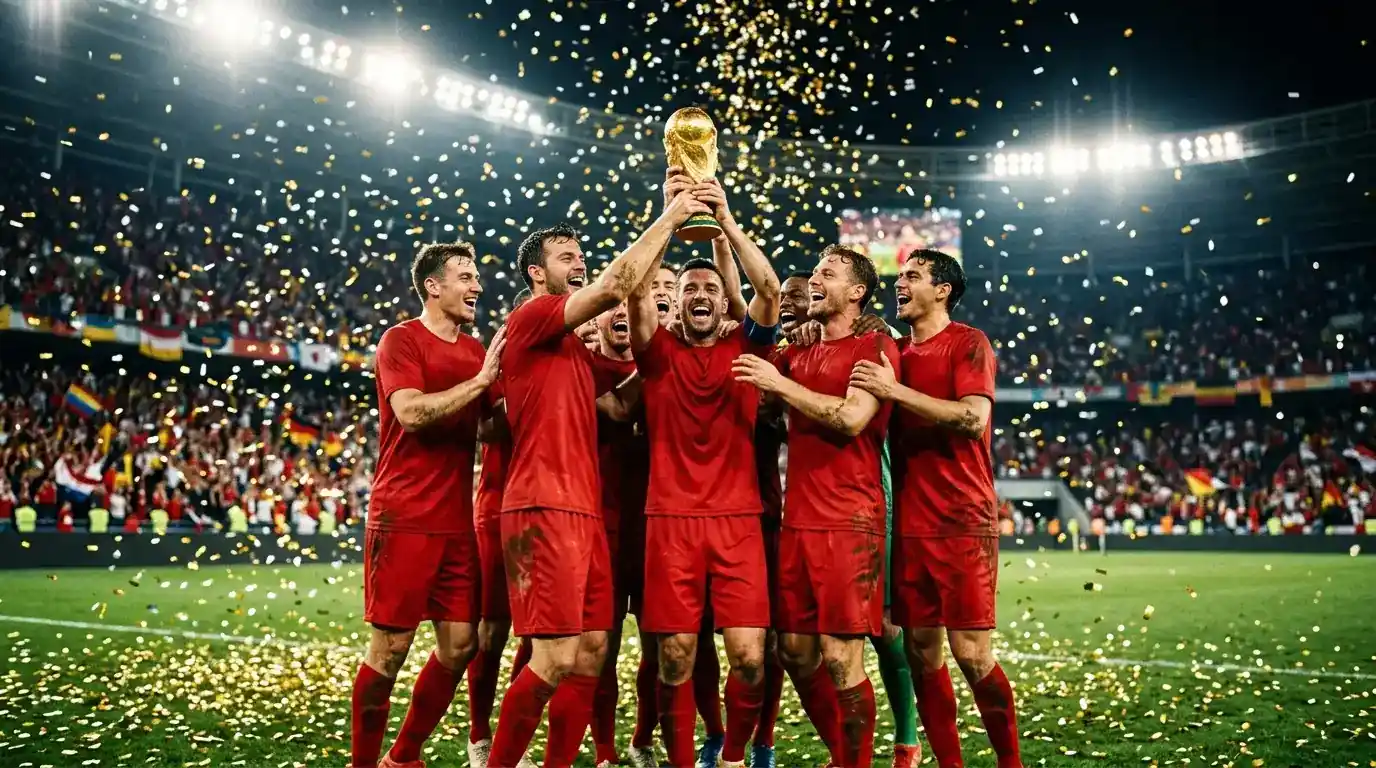
Spain lift the World Cup trophy at MetLife Stadium — and in doing so complete a sequence of records no other nation has ever assembled. Photo for illustration.
The Sequence That Built the Record
To appreciate what Luis de la Fuente’s side have done, it helps to lay out the chain. Spain’s men won Euro 2024 in Berlin, beating England in the final. Spain’s women had already won the 2023 World Cup in Sydney, beating England in that final too. Spain’s men, augmented by a generation that includes Lamine Yamal (19), Pau Cubarsí (19), Nico Williams and Pedri, then went to the United States, Canada and Mexico for the first 48-team World Cup and won every match they played. The 1-0 over Argentina in the final was Spain’s eighth win in eight games — seven clean sheets, one goal conceded, the fewest by any World Cup winner in the competition’s history.
The head-to-head history with England is the detail that completes the picture. The 2023 women’s final was a 1-0 Spanish win. The 2024 men’s Euro final was a 2-1 Spanish win. Both were settled in the closing stages. The pattern — late Spanish goals against technically equal opposition — is the one that has defined this generation. "I said gentlemen we have an appointment with history, and we want to be there first," de la Fuente said after the final, per Yahoo Sports.
A Defence That Rewrote the Record Book
The clean-sheet stat is the one that travels furthest. Spain conceded one goal in eight matches — fewer than any World Cup winner before them, despite the 48-team format meaning more games than any prior champion. Unai Simón’s record is its own paragraph: 7 clean sheets in the 2026 edition (the previous record of 5 was broken at the semi-final, with a 6th following in the final), 6 consecutive World Cup clean sheets spanning the 2022 and 2026 tournaments — a cross-tournament record — and a 650-minute consecutive World Cup clean-sheet streak that ended only when Belgium’s De Ketelaere beat him in the knockouts.
Behind the keeper, Rodri — the Golden Ball winner and the player whose 756 completed passes in the tournament (per beIN, post-final) is the most by any player at a single World Cup, past Xavi’s 599 from 2010 — anchored a midfield that allowed Spain to control possession against every opponent. Dani Olmo and Fabián Ruiz rotated the creative burden. Yamal and Williams provided the wide thrust. Oyarzabal, Baena and ultimately Ferran Torres rotated the centre-forward role. By the time Ferran struck in the 106th minute on Sunday, the script felt inevitable. The fact that it was a substitute who delivered the knockout blow was a footnote, not a surprise.
The Unbeaten Run and What Comes Next
Spain’s 38-match unbeaten run — the longest in international football history, past Italy’s 37 — was sealed with the trophy. Whether it survives into the next cycle will depend on a generation that is, by international standards, exceptionally young. Yamal and Cubarsí are 19. Pedri is 23. Rodri is 30. Simón is 28. The 2026 squad is not a one-off window; it is the spine of a team that should compete in 2030 (Morocco/Spain/Portugal) and likely 2034 (Saudi Arabia).
For Irish punters, the practical takeaway is structural. The markets that mattered in 2026 — outright, to-lift, group winners, top scorer — were largely settled by the favourites, with the Golden Ball as the one notable exception. The next cycle will not be the same. Spain’s dominance in 2026 will compress their outright price for 2030, and value will live elsewhere. But for now, the record stands: a federation, a generation, a double, and a first.
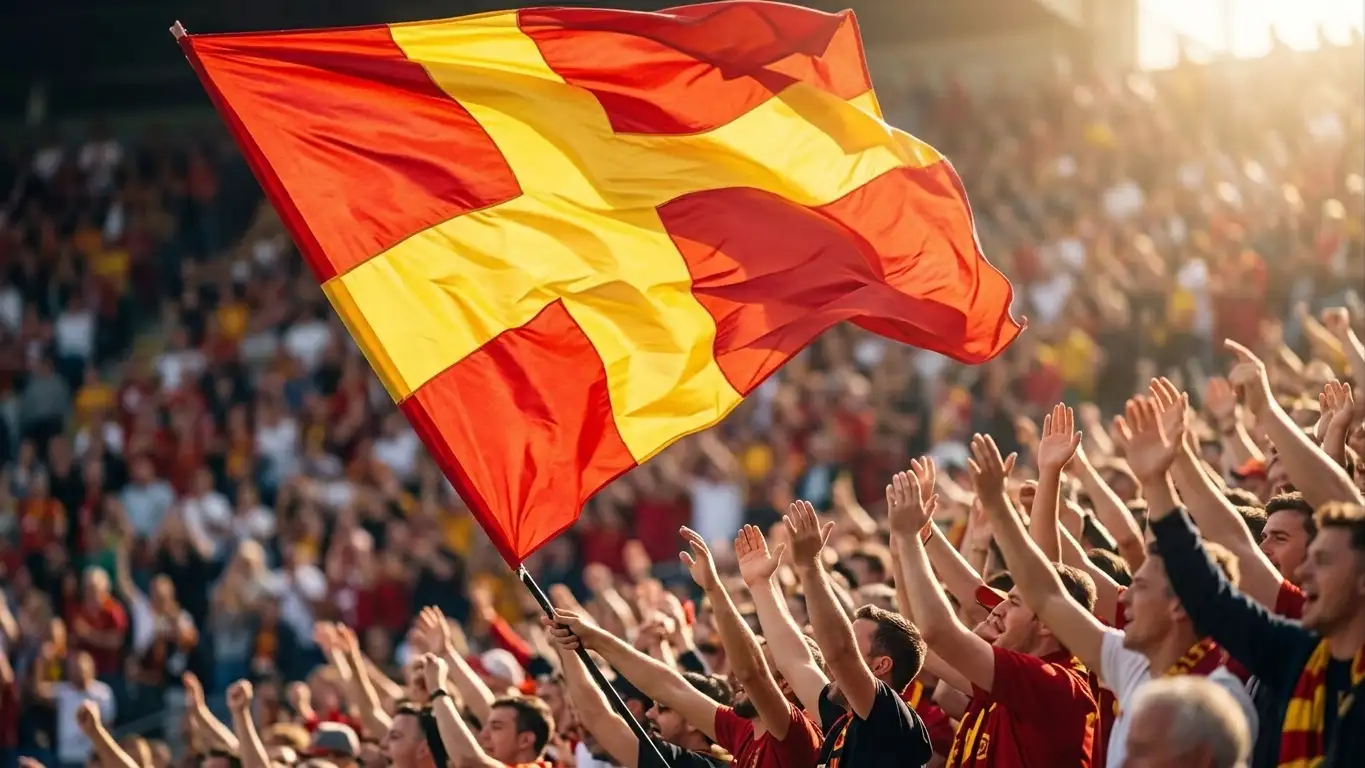
Spain’s unbeaten run reaches 38 — the longest in international football history. Photo for illustration.
- Spain completed the Euro 2024 + World Cup 2026 double — the first nation to hold both the European Championship and the World Cup simultaneously since France 2000.
- Combined with the women’s 2023 title, Spain are the first nation ever to hold the men’s and women’s World Cups at the same time.
- 1 goal conceded in 8 games — the fewest by any World Cup winner. Unai Simón’s 7 clean sheets in the edition is also a record.
- 38-match unbeaten run — a new outright international record (past Italy’s 37). Rodri’s 756 completed passes is a single-tournament record.
Statistics: Wikipedia / FIFA / beIN Sports, 20 July 2026. 18+. Gamble responsibly — visit gamblingcare.ie.
