
 Available in US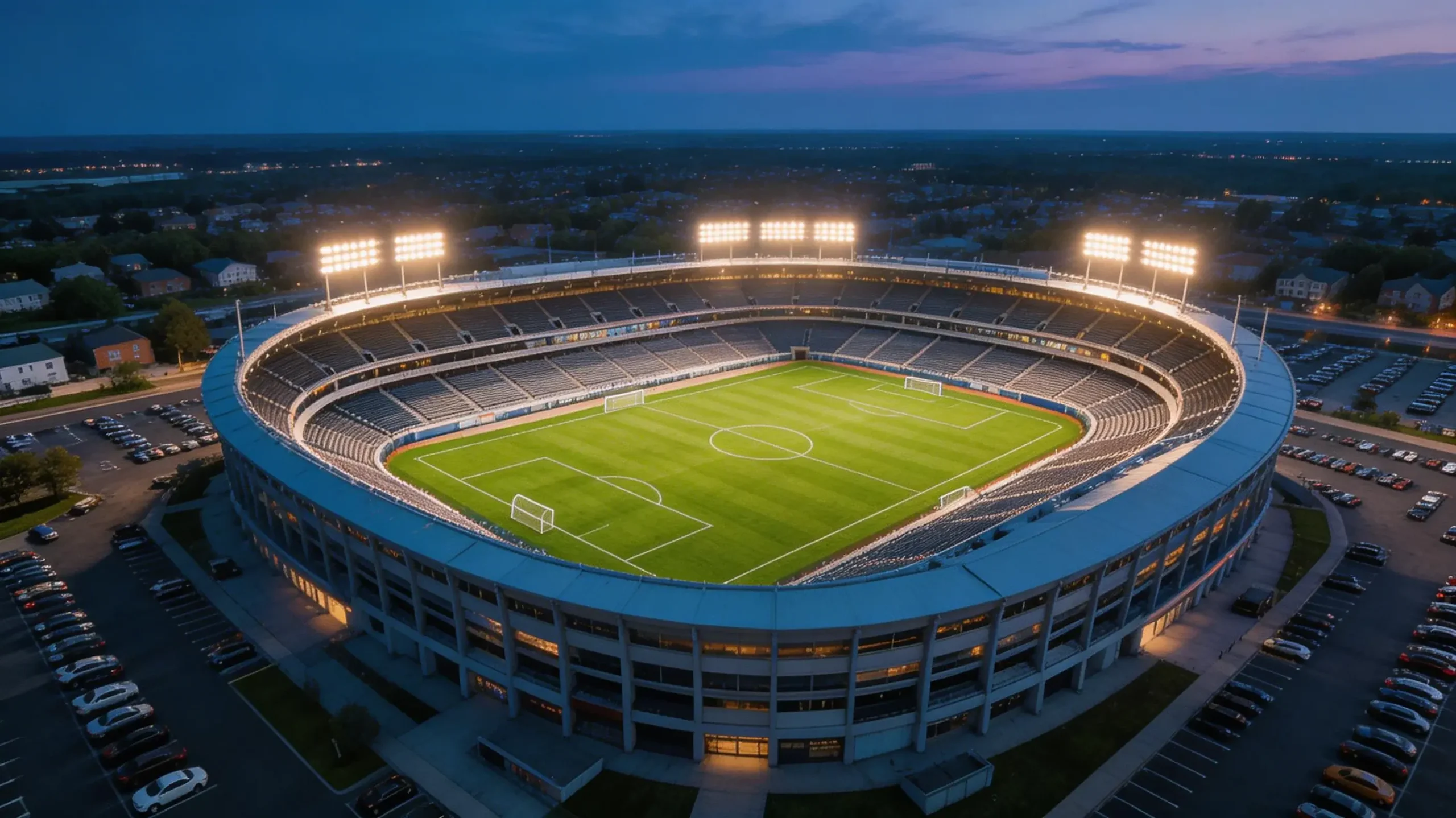
On 19 July 2026, the biggest match in world football will be played in a building that was designed for a sport where you carry the ball with your hands. MetLife Stadium in East Rutherford, New Jersey — home to the NFL’s New York Giants and New York Jets — will host the FIFA World Cup final, and the contrast between its regular tenants and its temporary role as football’s cathedral tells you everything about the ambition of the 2026 tournament. I have visited MetLife twice for football events, and the scale of the place is something you cannot fully appreciate from a television screen. This is a venue built to intimidate, and on final day, it will deliver an atmosphere unlike anything the World Cup has produced before.
About MetLife Stadium
MetLife Stadium opened in 2010, replacing the old Giants Stadium that had stood on the same site in the Meadowlands Sports Complex since 1976. The construction cost approximately $1.6 billion, making it one of the most expensive stadiums ever built at the time. The venue sits in East Rutherford, New Jersey — technically outside New York City, but firmly within the New York metropolitan area and accessible by public transport from Manhattan in under an hour.
The stadium’s capacity for the World Cup final is expected to be configured at approximately 82,500 seats, though the exact number will depend on FIFA’s pitch-level hospitality arrangements and broadcast infrastructure. For regular NFL games, MetLife holds 82,500 in its standard configuration, with the option to expand beyond 90,000 for major events. The venue is open-air with no retractable roof, which means the weather in mid-July will play a direct role in the final — temperatures in the New York area typically sit between 28 and 34 degrees Celsius in July, with humidity levels that can make conditions feel significantly warmer.
The playing surface will be natural grass for the World Cup, installed specifically for the tournament to replace the artificial turf used during the NFL season. FIFA mandates natural grass for all World Cup matches, and the installation process at MetLife — which involves laying a temporary grass pitch over the existing synthetic surface — has been tested at previous FIFA events hosted in NFL stadiums. The pitch dimensions will conform to FIFA’s standard of 105 metres by 68 metres, slightly narrower than some European club grounds but consistent with international regulations.
World Cup 2026 Matches at MetLife Stadium
MetLife Stadium will host multiple matches throughout the tournament, culminating in the final on 19 July. The exact group-stage fixtures assigned to MetLife have not been fully confirmed at the time of writing, but the venue is expected to host at least five or six matches across the group stage and knockout rounds, in addition to the final itself and potentially a semi-final.
The final is the centrepiece. It will kick off at a time optimised for global television audiences — likely 16:00 or 17:00 local time (ET), which translates to 21:00 or 22:00 IST. For Irish fans, that is a prime-time kick-off that does not require the late-night commitment of many group-stage matches. The timing makes the final the most accessible match of the entire tournament for viewers in the Irish time zone, and every pub in the country will be showing it.
The Round of 16 and quarter-final matches at MetLife will carry significant weight, as the New York venue is one of the flagship stadiums of the tournament. If England or another team of Irish interest reaches the knockout rounds and draws a MetLife fixture, the betting markets for that match will be shaped by the venue’s atmosphere, climate, and pitch conditions — all factors I will cover in detail as the tournament progresses.
Stadium Specifications and Capacity
The numbers tell the story of MetLife’s scale. At 82,500 seats in its standard football configuration, it will be the largest venue at the 2026 World Cup — larger than the Estadio Azteca (capacity approximately 83,000 but reduced for FIFA’s seating requirements) and significantly larger than most European stadiums used for international football. The stadium’s four-level bowl design creates a steep rake that brings upper-tier seats closer to the pitch than many comparable venues, and the open-air design allows natural sound to circulate without the acoustic dampening of a closed roof.
The playing surface sits approximately 15 metres below ground level, which creates a bowl effect that traps crowd noise and amplifies the atmosphere. For players accustomed to European stadiums with running tracks and open corners, the intimacy of MetLife — despite its enormous capacity — can be disorienting. The sidelines are close to the first row of seats, and the crowd’s proximity to the pitch creates an intensity that benefits the attacking team. From a betting perspective, home advantage for the USA (who will play group-stage matches at MetLife) is amplified by this stadium design, and any team playing at MetLife in the knockout rounds will need to adapt to the noise levels quickly.
East Rutherford and New York — The Host City
Calling MetLife Stadium a “New York” venue requires a geographical asterisk. The stadium sits in East Rutherford, New Jersey, across the Hudson River from Manhattan. The drive from Times Square takes approximately 20 minutes without traffic — but traffic in the New York metro area is never absent, and match-day travel times can stretch to an hour or more. The NJ Transit rail service connects Penn Station in Manhattan to the Meadowlands station, a short walk from the stadium, and this will be the recommended travel route for fans on match days.
For Irish fans travelling to the World Cup, New York is the most accessible US city. Direct flights from Dublin to JFK and Newark airports run multiple times daily, with flight times of approximately seven hours. The Irish community in the New York metropolitan area is one of the largest in the world — concentrated in areas like Woodlawn in the Bronx, Sunnyside in Queens, and various New Jersey suburbs — and the network of Irish pubs, cultural centres, and GAA clubs means that Irish fans will find a ready-made support infrastructure. Accommodation in Manhattan and the surrounding boroughs will be expensive during the World Cup, but New Jersey offers more affordable hotel options within easy commuting distance of the stadium.
The Meadowlands Sports Complex, which houses MetLife Stadium, also includes the Meadowlands Racetrack — a connection that will resonate with Irish punters familiar with the intersection of sport and betting. The complex has hosted major sporting events for decades, and the infrastructure for handling large crowds — parking, security, concession stands, public transport links — is well-established. Match-day logistics at MetLife will be smoother than at some newer or less-tested venues in the tournament.
Stadium History and Major Events
MetLife Stadium has hosted Super Bowls, major concerts, international football friendlies, and Copa America fixtures since its opening in 2010. Super Bowl XLVIII in 2014 was played in near-freezing temperatures — a reminder that the venue’s open-air design exposes it to whatever weather the New Jersey climate delivers. For the World Cup final in July, the concern is heat rather than cold, and FIFA’s cooling break protocols will be in effect if temperatures exceed certain thresholds.
The old Giants Stadium on the same site hosted matches during the 1994 World Cup — the last time the USA staged the tournament — including the famous group-stage match between Ireland and Italy, which Ireland won 1-0 through Ray Houghton’s iconic goal. That history adds a layer of emotional resonance for Irish fans watching the 2026 final from the same piece of New Jersey real estate. The Meadowlands has been good to Ireland, and the connection between 1994 and 2026 is one that older Irish football fans will appreciate deeply.
Travel Tips for Irish Fans
If you are planning to attend the World Cup final or any MetLife fixture, book flights early. Dublin to Newark is the most convenient route — Newark Liberty International Airport is approximately 20 minutes from East Rutherford by car or 40 minutes by public transport. JFK is the alternative, but the journey from JFK to MetLife crosses through Manhattan traffic and takes significantly longer.
Accommodation strategy matters. Manhattan hotels during the World Cup will command premium prices, but staying in Jersey City, Hoboken, or other Hudson County locations offers proximity to MetLife at a fraction of the Manhattan price. The PATH train connects these areas to Manhattan for sightseeing, and the NJ Transit system provides direct access to the Meadowlands. Booking six months in advance is advisable — by the time the group stage begins, availability near the stadium will be limited.
Match-day preparation at MetLife follows American stadium conventions. Arrive early — at least 90 minutes before kick-off for knockout matches, two hours for the final. Security screening is thorough, and the queue management at NFL-standard venues is efficient but time-consuming. Bring sun protection for July fixtures — the open-air stadium offers no shade for most seats, and the New Jersey sun in mid-July is relentless. Hydrate heavily. The concession stands inside MetLife are extensive but expensive, and the variety of food options reflects the New York area’s culinary diversity. For a comprehensive look at every stadium hosting matches at the tournament, the complete World Cup 2026 venues guide covers all 16 grounds.
